
C
CONSNECTLtd.
Loading
Get the latest construction industry insights and platform updates delivered to your inbox.
© 2026 Consnect. All rights reserved.
The Ministry of Infrastructure has signed a strategic framework contract with the international firm Dar Al-Handasah to streamline urban design and detailed physical planning across Rwanda. By centralizing procurement, the government aims to accelerate the delivery of high-quality, integrated neighborhood layouts—complete with roads, drainage, and public amenities—making it faster and more efficient for developers to secure construction permits and build sustainable communities.
Redempta
8 months ago
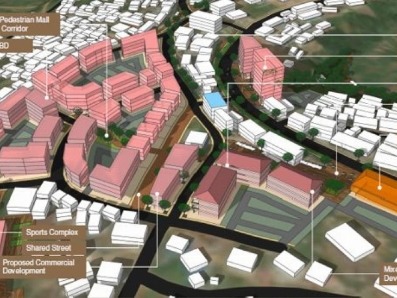
The landscape of Rwandan urbanization is set for a significant transformation. To bridge the gap between high-level master plans and ground-level construction, the Ministry of Infrastructure (MININFRA) has officially engaged Dar Al-Handasah Consultants (Shair & Partners) SAL to spearhead the design of detailed physical plans in Kigali and districts nationwide.
In Rwanda’s planning ecosystem, a detailed physical plan is the essential blueprint that turns raw land into a functional community. Without these plans, property owners are unable to obtain construction permits. These designs integrate:
Infrastructure: Robust transport networks and integrated drainage.
Public Utilities: Centralized sewage and stormwater management.
Community Amenities: Strategic placement of schools, green spaces, and sports facilities.
Environmental Protection: Ensuring development respects the natural topography.
Previously, the burden of developing these plans often fell on local residents or developers, leading to lengthy procurement cycles and inconsistent quality. The new framework contract acts as a centralized service hub.
Under this agreement, districts and government institutions can now issue direct service orders to Dar Al-Handasah. This eliminates the need for individual, time-consuming tender processes, significantly reducing the "red tape" that has historically delayed housing projects.
Jack Ngarambe, Director General at MININFRA, emphasizes that this move is about more than just speed—it’s about quality and integration.
"Detailed physical planning should go beyond basic components such as internal roads. It must present a comprehensive vision of a complete neighborhood, including mobility systems connected to the broader transport grid and optimal locations for public amenities."
By leveraging Dar Al-Handasah’s international expertise—the same firm behind the design of the Kigali International Airport in Bugesera—the government ensures that new settlements are built to world-class standards of sustainability and feasibility.
While the framework introduces a high-capacity international partner, the Ministry has clarified that this is an additional tool, not a mandatory monopoly. Districts remain free to explore alternative options, addressing concerns from local land surveyors and firms about market inclusivity.
The ultimate goal remains clear: to provide a flexible, high-quality mechanism that ensures every Rwandan neighborhood is planned with precision, paving the way for affordable, well-serviced, and organized housing for all.
Sign in to share your thoughts and engage with the community