
C
CONSNECTLtd.
Loading
Get the latest construction industry insights and platform updates delivered to your inbox.
© 2026 Consnect. All rights reserved.
RUBAVU, Rwanda Designed as a clean energy solution, the Keya Hydropower Plant is increasingly challenged by a persistent and largely underestimated force: sediment. Built in 2011 along the sediment-rich Sebeya River, the run-of-river facility was initially designed to generate 2.2 megawatts of electricity. Today, however, its output has dropped to nearly 900 kilowatts, a decline closely linked to the continuous influx of abrasive sediments that compromise its core infrastructure.
Redempta
6 months ago
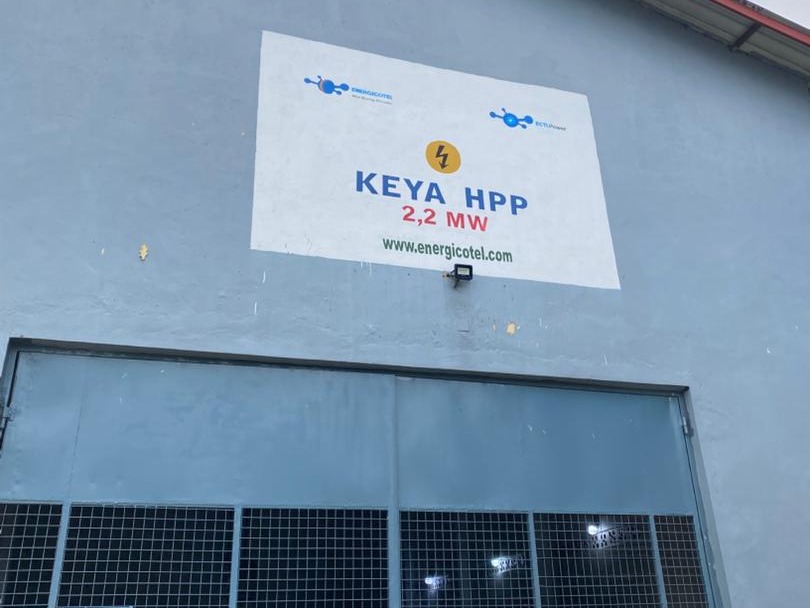
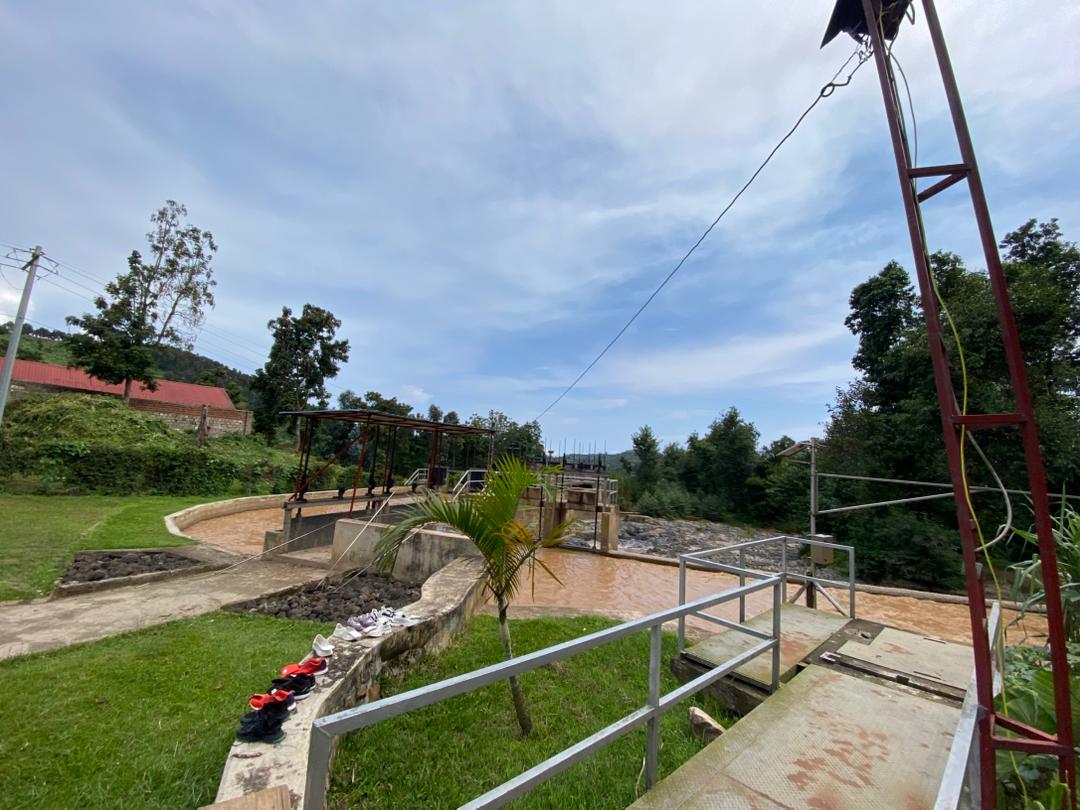
Unlike large storage dams, run-of-river systems depend on natural river flow with minimal storage. At Keya, this system is structured around three principal components: the catchment system, the hydraulic control structures (dam and gates), and the surge tank.
During a recent field visit, Patric Mbabazi, the plant’s electrical engineer and supervisor, described how water is first regulated in a reservoir with a capacity of approximately 60,000 cubic meters. The design benefits from the presence of igneous rock formations, providing natural stability and reducing the need for artificial reinforcement.
To maintain hydraulic efficiency, engineers incorporated a controlled slope to minimize energy losses. A network of flow meters, velocity sensors, and water-level sensors continuously measures discharge in cubic meters per second. These instruments are digitally connected, enabling real-time monitoring through SIM-based communication systems.
“This allows us to track whether inefficiencies come from the turbine, the generator, or water losses,” Mbabazi explained.
Despite these technological controls, sediment remains the plant’s most critical limitation.
Research conducted by Omar Munyaneza, Félicien Majoro, Sylvain Mutake, Emmanuel Hagenimana
Department of Civil, Environmental and Geomatic Engineering, College of Science and Technology, University of Rwanda, Kigali, Rwanda, reveals that the sediment basin—the primary structure designed to trap suspended particles—removes only 22% of incoming sediment. This leaves approximately 78% of particles, including fine sand, silt, and quartz-rich materials, to pass through the system.
These particles, though often microscopic, have severe consequences.
Under high hydraulic head conditions (approximately 87.6 meters net head), sediment particles act as abrasive agents. Medium and fine sand (0.2–0.6 mm), as well as silt containing quartz, contribute to micro-cutting, fatigue, and material detachment within turbine components.
The plant uses an OSSBERGER cross-flow turbine, selected for its self-cleaning properties. However, even this design has proven vulnerable. The first turbine was damaged within six months of operation, and subsequent replacements have also suffered from rapid wear.
The consequences of sediment intrusion extend beyond equipment damage.
According to field observations and technical reports:
Plant capacity has dropped from 2.2 MW to 900 kW
Operational hours have reduced from 24 hours to about 5 hours per day
Maintenance costs have increased due to frequent turbine replacement
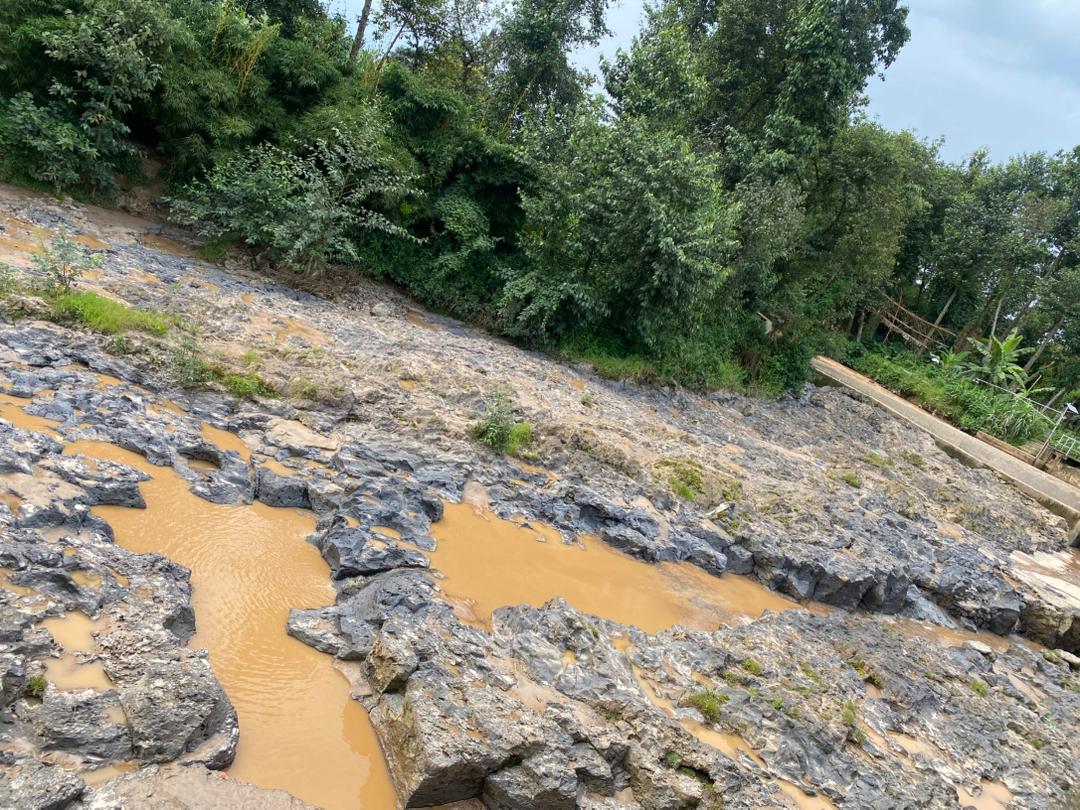
The sediment problem is particularly severe during the rainy season, when runoff from surrounding hills carries large volumes of eroded soil into the river system.
The root of the problem lies upstream.
The Sebeya catchment area, originating from the Gishwati highlands, is characterized by:
Deforestation
Unsustainable agriculture on steep slopes
Sand and mineral extraction along riverbanks
These activities accelerate erosion, producing a continuous supply of sediment that turns the river visibly brown and reduces water quality for hydropower generation.
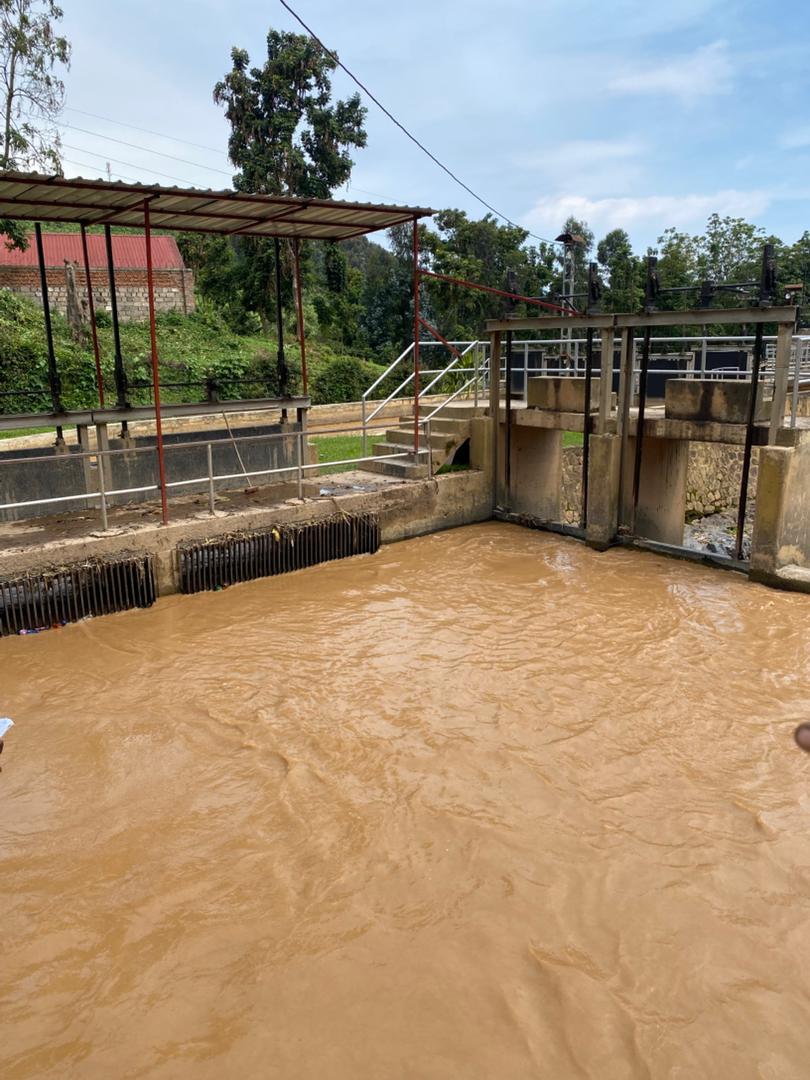
At the intake level, headworks and trash racks remove approximately 33% of coarse materials, including gravel and large debris. However, finer particles remain suspended and pass into the sediment basin.
Additional structures include:
Flushing gates, used to evacuate excess water and sediments
Inlet gates, regulating flow into the system
Filters and mechanical racks, which trap debris
Yet, the efficiency of these systems is limited by design constraints. The intake, riverbed, and weir are nearly at the same elevation, reducing the opportunity for natural sediment settling before water enters the system.
The forebay tank, located before the penstock, acts as a final settling zone, but its effectiveness is insufficient against high sediment loads.
At the reservoir level, sediment accumulation is managed through a combination of:
Flushing techniques
Manual dredging using spades
Operators close inlet gates, reduce water volume, and physically remove sand deposits. While effective in the short term, this approach is labor-intensive and does not address the continuous inflow of sediment.
Beyond operational challenges, environmental issues are also emerging.
The absence of a properly designed downstream channel following water overflow disrupts aquatic ecosystems. This lack of controlled water pathways threatens biodiversity and highlights the need for integrated environmental planning in hydropower projects.
Experts suggest that resolving sediment challenges at Keya requires a combination of structural and ecological interventions:
Construction of an upstream sediment trap reservoir
Deepening and widening of the intake and weir system
Development of a headrace channel to allow pre-settlement of coarse particles
Catchment restoration through afforestation and terracing
Riverbank stabilization using vegetation such as bamboo
The case of the Keya Hydropower Plant underscores a critical lesson for hydropower development in sediment-prone regions: engineering solutions alone are not sufficient.
Effective hydropower management requires a “sediment-conscious” approach—one that integrates design, monitoring, maintenance, and watershed management.
As Rwanda continues to expand its renewable energy capacity, the future of plants like Keya may depend not only on turbines and technology, but on how well the landscape upstream is managed.
Sign in to share your thoughts and engage with the community